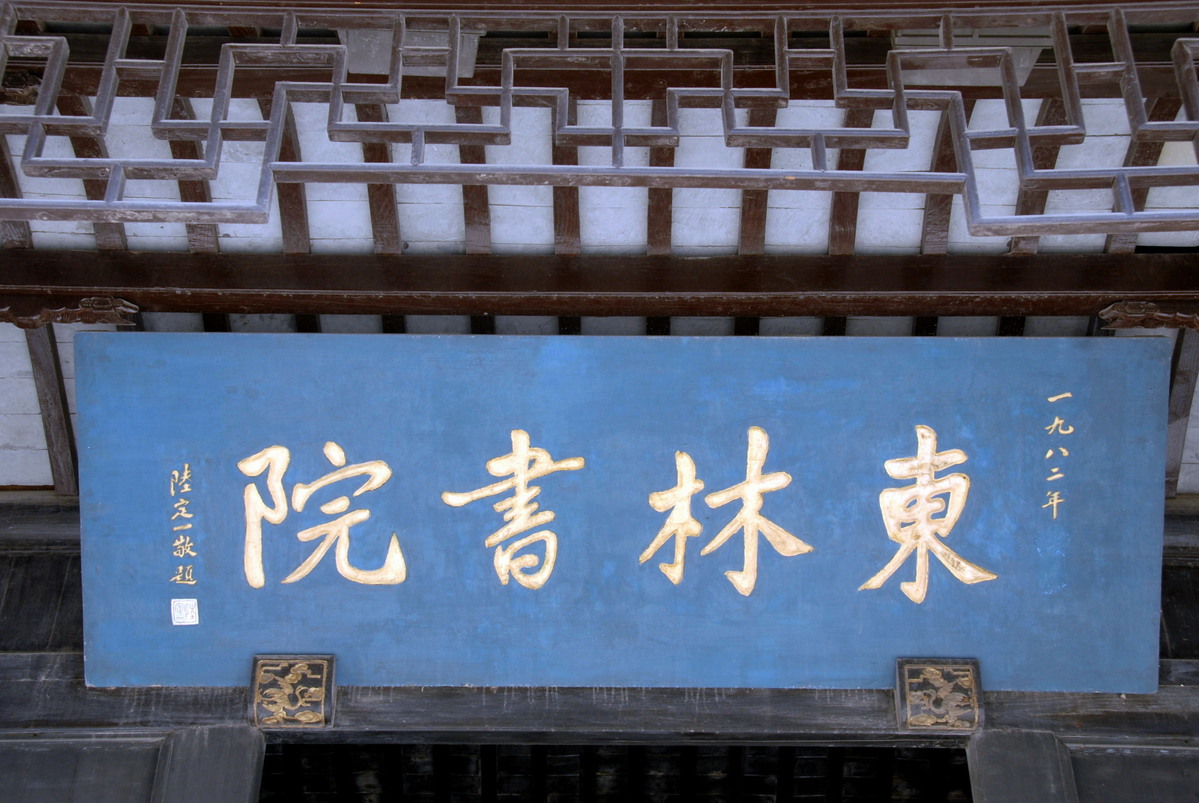
Donglin Academy
Introduction
Donglin Academy of Classical Learning, located in Wuxi, Jiangsu province, China, is a historic institution that holds a significant place in the country's cultural and educational history. Founded in 1111 during the Northern Song Dynasty (960-1127) , it initially served as a venue for lectures by the renowned scholar Yang Shi before transitioning into a monk's residence. The academy underwent a major restoration in 1604 during the Ming Dynasty (1368-1644), led by Gu Xiancheng, a dismissed official, along with Gao Panlong and Gu Yuncheng. These three scholars, collectively known as the "Donglin People," revitalized the academy and began delivering lectures that emphasized social reform, innovation, and the importance of addressing societal issues.
The Donglin Academy quickly became a hub for intellectual and cultural exchange, attracting scholars and students from across the South Yangtze River region. Its influence extended beyond academia, as the Donglin People were known for their advocacy against social corruption and their commitment to moral integrity and reform. Despite facing persecution and destruction during the eunuch clique's suppression of academies in 1625, the academy was restored in 1629 under Emperor Chongzhen's reign. Over the centuries, Donglin Academy has been repaired and renovated multiple times, including significant restorations in 1902, 1947, and 2002.
Today, Donglin Academy is recognized as a national cultural heritage conservation site, a AAAA National Tourist Attraction, and a provincial Patriotism Education Base. It continues to serve as a symbol of China's rich cultural heritage and educational legacy, inspiring generations with its values of rigorous study, moral integrity, and dedication to societal progress.
Architecture
Donglin Academy's architectural design reflects the elegance and sophistication of traditional Chinese academies, with structures that embody the cultural and historical essence of the Ming and Qing dynasties. The academy's main buildings include the Stone Memorial Archway, Pan Pond, Exquisite Rooms of Donglin, Lize Hall, Yiyong Hall, and Yanju Temple, among others. These structures have been meticulously restored to resemble their original appearance, showcasing the craftsmanship and aesthetic principles of ancient Chinese architecture.
The Stone Memorial Archway serves as a prominent entrance to the academy, symbolizing its historical significance and cultural prestige. Pan Pond, a serene water feature, adds to the tranquil atmosphere of the site, while the Exquisite Rooms of Donglin provide spaces for scholarly activities and intellectual pursuits. Lize Hall, one of the central buildings, has been a focal point for lectures and discussions since its restoration in 1629. Yiyong Hall, where Gu Xiancheng's famous antithetical couplet hangs, embodies the academy's dedication to the integration of personal, familial, and societal responsibilities.
The academy's layout and design emphasize harmony with nature, incorporating elements such as courtyards, gardens, and water features to create an environment conducive to learning and reflection. The restoration efforts undertaken by the Wuxi government in 2002 ensured that these architectural features were preserved and enhanced, allowing visitors to experience the historical and cultural ambiance of Donglin Academy.
Legacy
The legacy of Donglin Academy is deeply intertwined with China's cultural and educational history. As a center for intellectual and moral development, the academy has inspired generations of scholars and citizens to pursue rigorous study, ethical behavior, and societal progress. The Donglin spirit, characterized by a commitment to reform and a sense of responsibility for world affairs, remains a guiding principle for individuals seeking to make a positive impact on society.
Donglin Academy's influence extends beyond its historical significance, serving as a living testament to the enduring values of traditional Chinese culture. Its preservation and revitalization efforts have ensured that the academy continues to enlighten, educate, and inspire people from all walks of life. By integrating modern approaches with its rich cultural heritage, Donglin Academy has successfully bridged the gap between past and present, making traditional culture accessible and relevant to contemporary audiences.
As a national cultural heritage conservation site and a symbol of China's intellectual and moral legacy, Donglin Academy occupies an important position in the nation's history. Its contributions to education, culture, and societal progress have left an indelible mark on Chinese civilization, ensuring that its values and principles will be passed down for generations to come.








